Robotics is a branch of technology that focuses on building and using robots. These machines can do tasks automatically, often taking over jobs that are dangerous or repetitive for people. In recent years, robotics has become a major part of industrial automation machinery, helping companies improve production, automate processes, and enhance worker safety.
In factories, robots are used to handle many tasks, such as putting things together, packing products, welding parts, and checking for quality. By adding robots to machines, businesses can reduce mistakes, increase production speed, and save money. This shift has helped make factories more advanced and efficient, leading to what we now call the rise of robotics automation in industrial equipment design.
Key Benefits of Robotics in Industrial Equipment Design
Robots are reshaping the manufacturing process with key advantages:
- Better Accuracy and Efficiency – Robots are incredibly precise. They perform tasks consistently and without variation, resulting in fewer mistakes and higher product quality. This directly supports high levels of efficiency and output.
- Saving Money Over Time – Investing in robotics can save money in the long run. Robots don’t need breaks, so they can work all day and night. This cuts down on labor costs and helps avoid mistakes or injuries that could cost money.
- Safer Work Environments – Robots can handle jobs that are too dangerous for people, like working with heavy machines, harmful chemicals, or very hot or cold conditions. This helps keep workers safe and lowers the number of workplace injuries.
Applications of Robotics in Industrial Equipment Design
Robots are now used in many industries and play a big role in how machines are built and used. Here are a few examples:
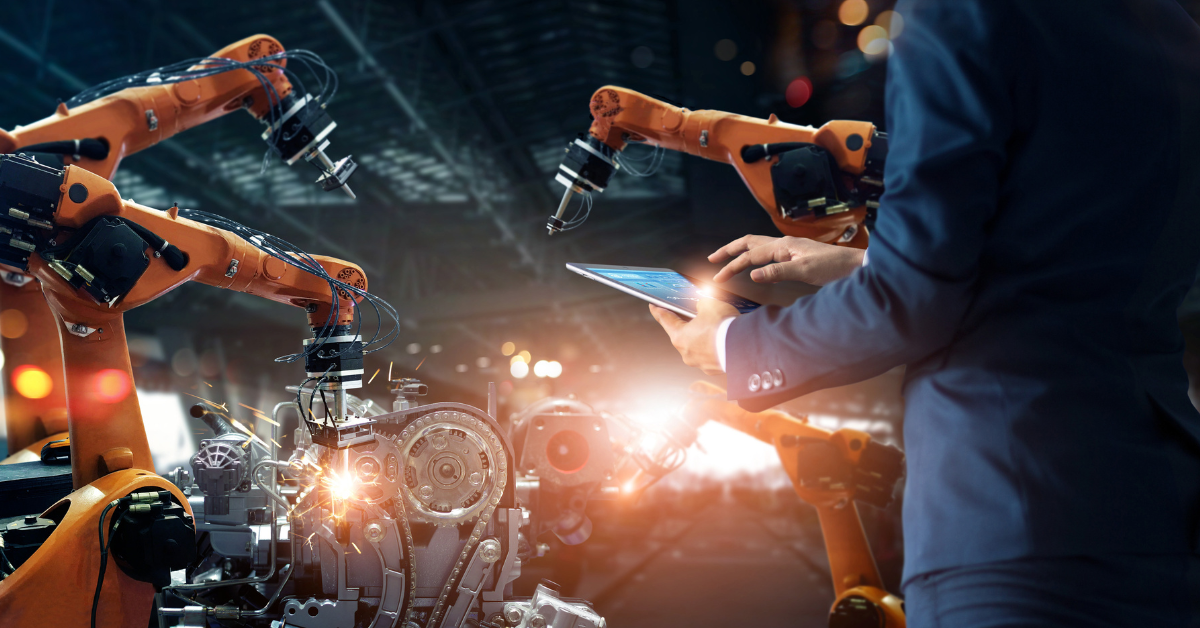
- Automating Manufacturing Tasks – In factories, robots handle jobs like putting parts together, painting, welding, and packaging. Because robots can work quickly and don’t get tired, they help speed up production. For example, in car manufacturing, robotic arms in manufacturing are used to place parts with great accuracy. This not only boosts speed but also helps companies keep up with demand while maintaining quality.
- More Flexibility in Production – One of the advantages of robotic systems is their flexibility. Robots can be reprogrammed for different tasks, allowing businesses to adapt quickly to changing needs without interrupting operations. This makes them ideal for both high-volume and custom automation solutions.
- Smarter Robots with AI – The integration of artificial intelligence (AI) has made robots smarter and more autonomous. These systems can analyze data, detect problems, and adapt in real time, often with little to no human intervention. Smarter robotics can now self-diagnose issues, suggest maintenance, and optimize performance automatically.
Challenges in Implementing Robotics in Industrial Equipment
Even though robotics has many advantages, there are some difficulties when adding it to a business.
One big challenge is the high cost at the beginning. Buying robots, installing them, and updating equipment can be expensive, especially for smaller companies. Businesses also need to spend money on programming and maintenance.
Another issue is training. Workers need to learn how to operate and take care of robots, which requires special skills. This means companies may need to provide training or hire new employees with the right knowledge.
Finally, adding robots to existing machines can be tricky. Older equipment may need updates or changes so it can work with robots. This can take time and money, especially in factories that haven’t been updated in a while.
The Future of Robotics in Industrial Equipment Design
The future of robotics looks very promising. Robots are getting faster, more accurate, and better at doing complicated tasks. Thanks to AI and machine learning, they’re also getting smarter and more adaptable.
A major trend is the growth of collaborative robots or cobots, which safely work next to people. These robotic manufacturing systems can help employees with tasks and reduce the risk of accidents. We’ll also see more robots made specifically for industries like healthcare, farming, and shipping, where there’s a strong need for safer and faster work.
Even though there may be concerns, like the potential loss of some jobs, the overall growth of robotics is expected to help industries and boost the world economy. Robots will help make products faster, cheaper, and of better quality, giving businesses new chances to grow and innovate.
Frequently Asked Questions
What is industrial robotics?
Industrial robotics refers to the use of programmable machines to perform tasks in manufacturing and production environments. These robots can handle repetitive, dangerous, or highly precise tasks, improving efficiency and safety.
When did robots first appear in industrial settings?
Traditional industrial robots first appeared in industrial settings in the late 1950s. One of the earliest examples was the Unimate robot, which was introduced in a General Motors factory in 1961 to move metal parts on the assembly line.
What are the main types of industrial robots?
The most common types of industrial robots include:
- Articulated robots (robotic arms)
- Cartesian robots (linear movement)
- SCARA robots (Selective Compliance Assembly Robot Arm)
- Collaborative robots (cobots)
Each type is designed for specific tasks depending on speed, precision, and workspace requirements.
How are modern robots different from early industrial robots?
Modern robotic systems are smarter, faster, and more flexible. Thanks to advancements in AI, sensors, and machine learning, they can now adapt to changes in real-time, work alongside human operators, and handle a wider variety of tasks with greater precision.
What industries use industrial robotics the most?
Robotics plays a major role across the manufacturing industry, especially in sectors like the automotive industry, electronics, metal fabrication, pharmaceuticals, food and beverage, and logistics, where it’s used to boost production speed, enhance quality, and improve workplace safety.
What is collaborative robotics?
Collaborative robotics (or cobots) involves robots that are designed to safely work alongside humans. Unlike traditional robots, cobots are equipped with advanced sensors and software that allow them to detect human workers and adjust their actions to prevent accidents.
The Impact of Robotics in Industrial Machinery
Robotics in industrial machinery is already transforming the way industries operate. From basic automation tools to sophisticated systems capable of high-speed, precise tasks, robotics has driven improvements in safety, cost reduction, and overall productivity. As automation technology advances, robots are becoming more intelligent, working alongside human operators to achieve even greater efficiency and accuracy.
As an engineering company in Houston, TX, we help businesses integrate the latest in robotics and automation technologies to improve operations. Whether you’re upgrading to CNC systems or incorporating AI-powered robots into your processes, our team ensures your machinery is future-ready.
Ready to take your production to the next level? Contact us today to get a free consultation and explore how robotics can enhance your industrial equipment.